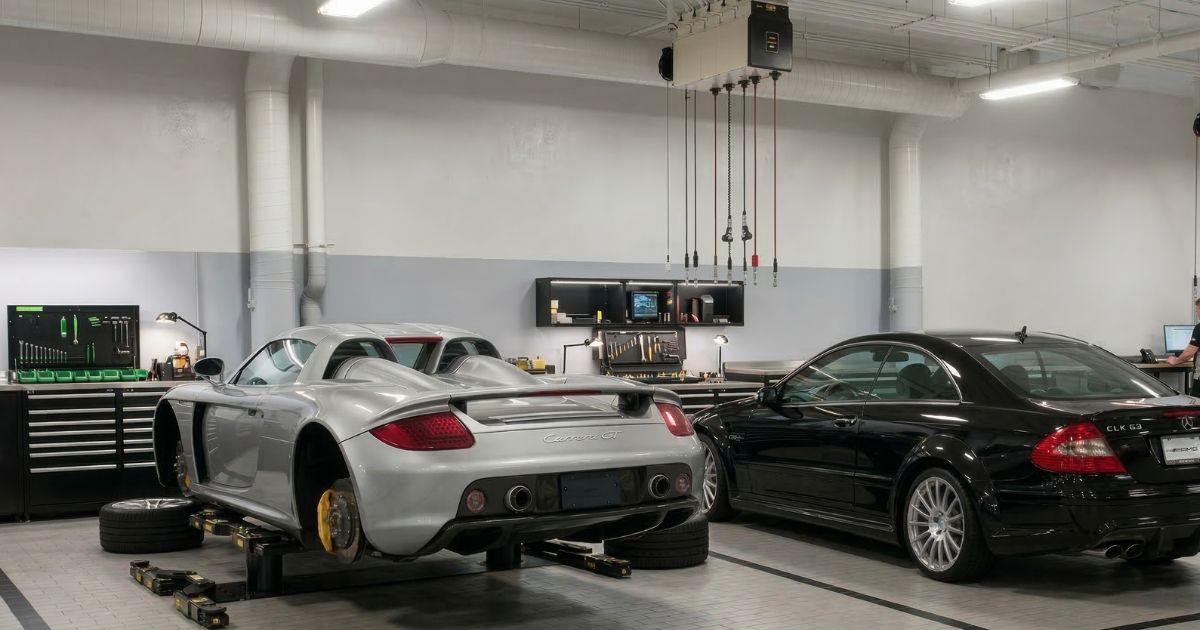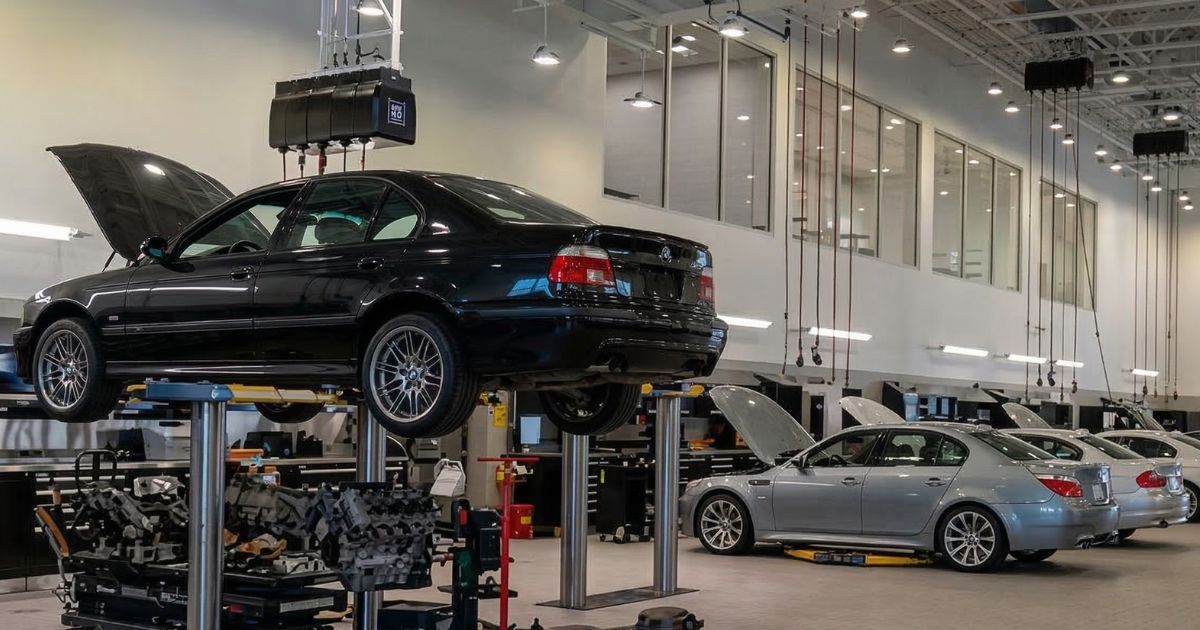
Good documentation helps sell almost any enthusiast car. But for certain models, it is not just helpful, it is the deciding factor in whether the car sells at all, and at what price.
These are the cars where known failure points are expensive enough, and buyer awareness high enough, that a missing service record does not just create uncertainty. It creates a specific dollar figure in the buyer's head, the cost of the worst-case outcome, and that number comes directly off your asking price.
Here are the ten models where a complete, verified service history does the most work.
1. BMW E46 M3 (2001–2006)
The S54 engine and E46 chassis are engineering achievements with three well-documented vulnerabilities: subframe cracking, VANOS failure, and rod bearing wear. Every knowledgeable buyer walks in knowing these three items and looking for evidence they have been addressed.
Without a subframe reinforcement receipt, a VANOS service record, and documented bearing history, or a Blackstone oil analysis report showing clean bearing metals, a buyer is looking at potentially $10,000 in immediate deferred maintenance. They will price that into their offer whether you like it or not. Documentation of all three items does not just add value; it removes a discount that would otherwise be automatic.
2. BMW E9X M3 (2008–2013)
The S65 V8's rod bearing vulnerability is the most discussed mechanical concern in the modern M car community. A documented bearing replacement with quality aftermarket units, BE Bearings and VAC Motorsports are the well-regarded options, consistently adds $5,000 or more to achievable sale price compared to an equivalent car without records.
Throttle actuator replacement documentation, with upgraded units on both banks, is the second item buyers check. Together, these two service records transform an unknown-risk purchase into a known-quantity one, and buyers pay for that certainty.
3. Mercedes-Benz W204 C63 AMG (2008–2015)
The M156 engine is genuinely excellent, but early examples have a specific failure mode that creates outsized anxiety in the buyer community: head bolts that can snap, with consequences that reach into the cylinders. An invoice showing the updated SLS-style head bolts have been installed is the document that converts a cautious buyer into a confident one. Without it, buyers either walk away or price the risk in aggressively.
4. Porsche 991.1 GT3 (2014–2016)
Early 991.1 GT3s were subject to an engine replacement program following catastrophic failures tied to connecting rod bearing and finger follower issues. Porsche offered a ten-year engine warranty on affected cars, but that clock is running out on the earliest examples.
Buyers need to see the G-series engine replacement documentation. Without it, the car carries an expiring warranty on a known failure mode, and value falls accordingly as the deadline approaches. This is one of the clearest cases in the enthusiast market where a single document, the engine replacement stamp, determines whether the car is sellable at market rate or not.
5. Porsche 996 (1999–2005)
The IMS bearing is the most famous mechanical concern in Porsche's modern history. Its failure mode is well understood, its consequences are catastrophic, and every 996 buyer asks about it before they ask about anything else.
A receipt for an LN Engineering ceramic bearing replacement or equivalent IMS solution is the document that lets a buyer sleep at night. Without it, the car carries a permanent asterisk regardless of how it presents otherwise. With it, the most significant risk factor in 996 ownership is removed from the conversation entirely.
6. Ferrari F355 (1994–1999)
The F355's engine-out timing belt service, required every three to five years regardless of mileage, is the defining maintenance event of ownership. The labor alone typically runs $5,000–$10,000 because the entire engine and subframe must be dropped to access the belts.
A belt service performed four years ago means the car is effectively approaching the next major service interval. Buyers factor that cost into their offers immediately. A freshly documented belt service is one of the most valuable single entries in any Ferrari archive, it removes an imminent five-figure expense from the buyer's calculation and justifies a corresponding premium in the asking price.
7. Land Rover / Range Rover 5.0L Supercharged (2010s)
The 5.0-liter supercharged V8 is a capable engine with a well-known weakness: timing chain tensioners and guides that wear prematurely. A cold-start rattle is the warning sign buyers listen for specifically. Once heard, the transaction is effectively over.
Documentation of timing chain guide and tensioner replacement is the only way to move these vehicles in the used market without a significant discount. Buyers know what the rattle means and what fixing it costs. A service record showing the work has been done removes the single largest objection in the purchase conversation.
8. BMW E60 M5 (2006–2010)
The E60 M5 is the most documentation-dependent car on this list. The V10 S85 engine requires VANOS high-pressure pump service, has rod bearing concerns on higher-mileage examples, and the SMG III transmission demands its own maintenance attention. Any one of these items unaddressed creates buyer hesitation. All three unaddressed creates a car that knowledgeable buyers avoid entirely.
An E60 M5 with no service records is a liability at any price. The same car with a complete digital binder documenting pump service, bearing history, and transmission maintenance is a legitimate collector piece. The documentation gap between these two versions of the same car is wider than on almost any other model.
9. Mercedes-Benz E63 AMG (2007–2011)
The M156 engine in the E63 shares the camshaft lobe and lifter wear concern common to this engine family. Buyers who know the car listen for the valve train tick on cold start, it is the sound of an engine grinding through soft metal. A service record documenting valve train inspection or camshaft and lifter replacement is the proof that the engine is not quietly destroying itself. Without it, the tick, real or imagined, lives in every buyer's mind.
10. Bugatti Veyron (2006–2015)
A routine oil change on the Veyron involves sixteen drain plugs and requires removing the rear bodywork. The service intervals are expensive, the procedures are complex, and the consequences of deferred maintenance at this performance level are severe.
At this price point, a buyer's word means nothing and a seller's word means less. Factory-certified documentation of every service event is not a differentiator, it is the minimum standard for the car to be considered sellable to serious collectors. An undocumented Veyron is not a bargain. It is a problem that has been passed along.
The Common Thread
Every car on this list has the same underlying dynamic: a known failure mode that is expensive to address and that buyers have researched before they ever contact a seller. Documentation does not create value out of nothing, it reveals value that already exists but cannot be seen without evidence.
For these cars more than any others, your service history is an asset. Treat it like one.
Frequently Asked Questions
Why do these specific cars need documentation more than others?
Each of these models has at least one well-known failure mode that is both expensive to repair and directly researchable by buyers. When a buyer knows exactly what can go wrong and exactly what it costs to fix, they price that risk into every offer on an undocumented car. Documentation removes that discount by proving the risk has been addressed.
Does documentation help even if some services are missing?
Yes. Partial documentation with honest disclosure of gaps is consistently more credible than no documentation at all. Buyers penalize uncertainty more than they penalize honest gaps. A seller who presents what they have and is transparent about what they do not know is more trustworthy, and achieves better prices, than one who offers vague assurances.
How do I document service that was performed but receipts no longer exist?
Contact the shop that performed the work, most retain records for several years and will provide copies on request. For older work, a current inspection by a qualified specialist can establish the present condition of the components in question and provide a written baseline report. Something is always better than nothing.