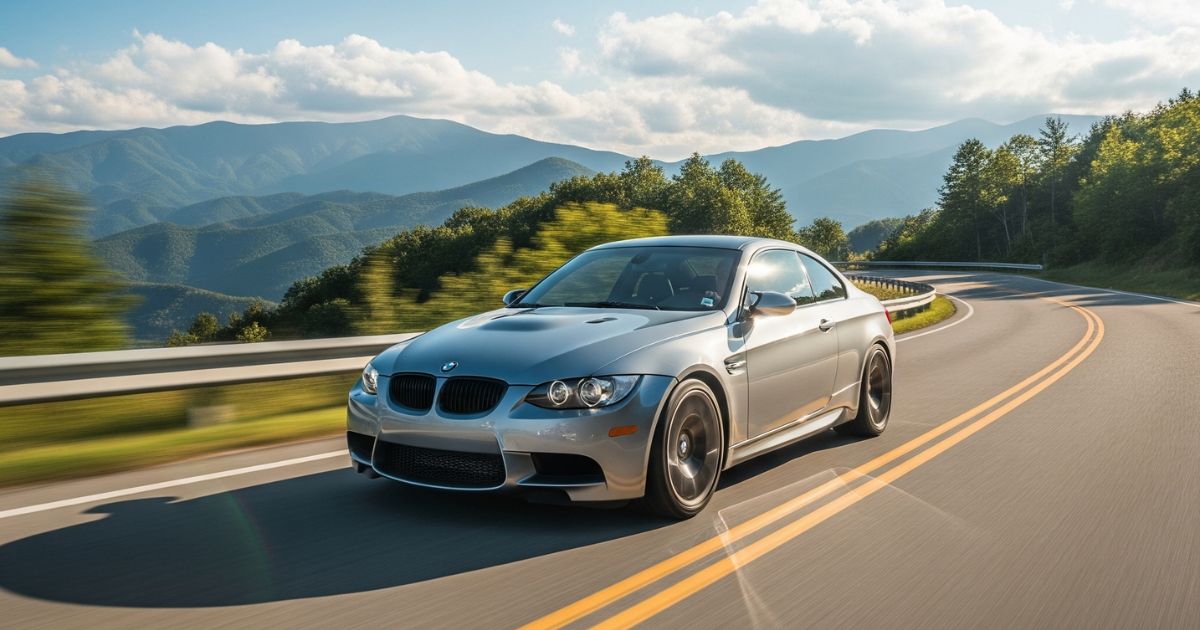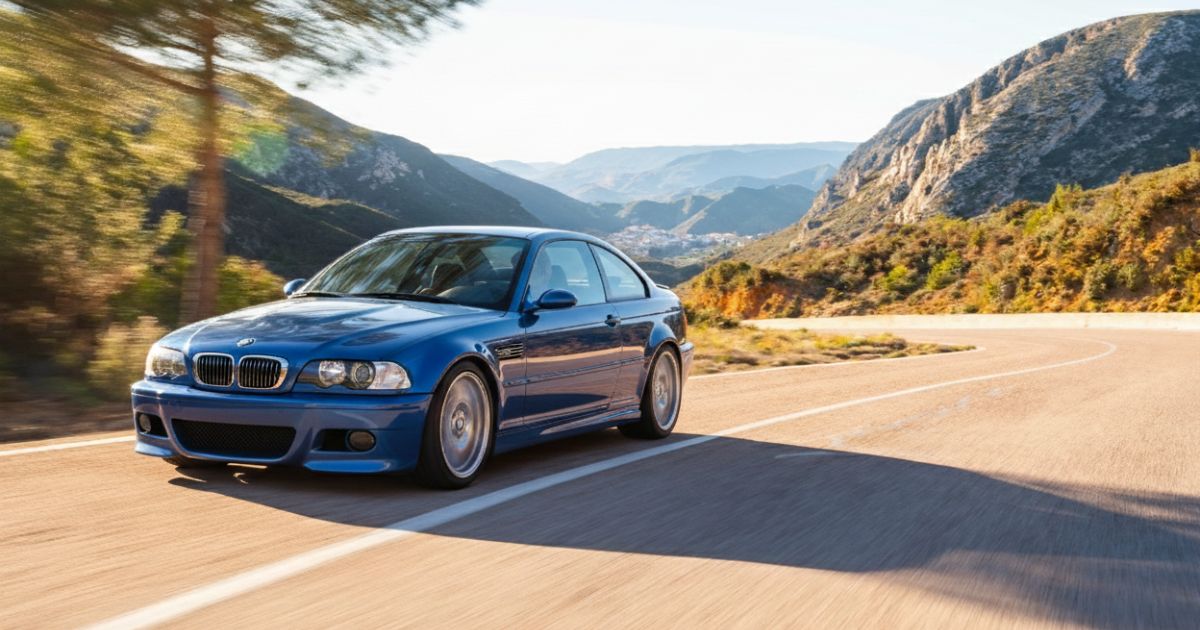
The BMW E46 M3, produced between 2001 and 2006, is widely regarded as the last truly analog M3. Before turbocharged engines, before electric steering, before the electronics that now mediate everything, the E46 M3 gave you a 333-horsepower naturally aspirated inline-six, hydraulic steering, and a chassis balanced so precisely that it remains a reference point for driver engagement two decades later.
In 2026, the E46 M3 is firmly in appreciation territory. Clean, documented examples are climbing in value, the community of knowledgeable owners is large and vocal, and the cost of buying the wrong car is high. Here is what you need to know before buying one.
The Lineup: Coupe and Convertible Only
Unlike its predecessor and successor, BMW produced the E46 M3 exclusively in coupe and convertible body styles, no sedan. This focused development resulted in a car with a singular purpose, and it shows. The coupe is the version most buyers want: maximum structural rigidity, the cleanest silhouette, and the strongest resale trajectory.
The convertible offers open-air driving at the cost of some structural rigidity and a weight penalty. It is a legitimate choice for the right buyer but trades at a meaningful discount to the coupe in the collector market.
One thing worth knowing: the E46 M3 did not receive a traditional facelift during its production run. The 2003.5 model year brought LED taillights and a wider trunk handle. Late-model cars received minor interior trim changes. Otherwise, the car looked the same from 2001 to 2006, which makes condition and specification more important than model year in most buying decisions.
The S54: One of the Best Engines Ever Made
The S54B32 is a 3.2-liter naturally aspirated inline-six producing 333 horsepower at 7,900 RPM with a redline of 8,000 RPM. Individual throttle bodies, a high-pressure VANOS system, and an 11.5:1 compression ratio give it a character that no turbocharged engine replicates. It is frequently cited as one of the greatest engines BMW has ever produced.
It is also an engine with specific, well-documented vulnerabilities that every buyer must understand before purchase.
The Three Issues Every E46 M3 Buyer Must Know
Rod bearing failure is the most serious mechanical concern on the S54. The engine was built with tight bearing clearances, and insufficient lubrication, whether from extended oil change intervals, the wrong oil specification, or oil starvation under hard cornering, leads to premature rod bearing wear. If left unaddressed, bearings spin and destroy the crankshaft and engine block. Preventive replacement is recommended every 60,000–80,000 miles. This is not optional maintenance, it is the defining service event of E46 M3 ownership, and its documentation is the first thing any knowledgeable buyer checks.
VANOS system failure presents as a rattling sound at cold start, the classic description is marbles in a tin can, combined with a loss of low-end torque. The internal seals degrade over time, solenoids fail, and on some cars the exhaust cam gear bolts shear off. A VANOS rebuild is well-understood and not catastrophically expensive, but a car with an unaddressed VANOS rattle is telling you something about how it has been maintained overall.
Rear subframe cracking is a structural issue, not a wear item. The sheet metal where the rear subframe mounts to the chassis fatigues and cracks under the continuous stress of the drivetrain. The correct fix is reinforcement plates welded to the floor pan by a qualified shop. A reputable specialist should provide a written inspection report or photographs confirming the subframe has been inspected, and ideally reinforced, before you buy.
Transmission: Manual or SMG?
This decision matters more on the E46 M3 than on almost any other car in this price range.
The 6-speed Getrag manual is the transmission enthusiasts want. It offers a direct mechanical connection, long-term reliability, and strong resale value. This is the car to find.
The SMG-II sequential gearbox is a manual transmission with an automated hydraulic clutch. It shifts quickly but has well-documented reliability concerns, the hydraulic pump and actuators are failure-prone, and many owners have chosen manual conversions to eliminate these issues entirely. SMG cars trade at a meaningful discount to manual cars, and for good reason. If you are buying an SMG car, factor the potential cost of a conversion or hydraulic system repair into your budget.
Chassis and Suspension: What Wears and What to Look For
The E46 M3's hydraulic steering and near-50/50 weight distribution are what make it feel the way it does. Maintaining that feel requires attention to specific components.
Front control arm bushings (FCABs) are common wear items. Failed FCABs cause steering wobble and vague turn-in, you will feel it immediately during a test drive. Replacement is straightforward and their condition should be documented in the service history.
Rear trailing arm bushings (RTABs) affect rear-end stability under hard acceleration and cornering. Worn RTABs make the rear feel unsettled. Another well-understood maintenance item that should be documented.
The cooling system follows the same pattern as most BMWs of this era, plastic radiator, plastic water pump, plastic expansion tank. These components degrade with age and heat cycles. A full cooling system overhaul every 60,000 miles is the correct approach. Look for documentation of this service on any car with significant mileage.
Body and Rust: Where to Look
The E46 M3 is relatively rust-resistant, but two areas deserve specific attention.
Rear wheel arch corrosion develops where dirt and salt collect behind the plastic liners. Remove the liners during a PPI and inspect the metal behind them.
Front fender rust forms at the bottom where the fenders meet the side skirts, a moisture trap that is easy to miss on a quick visual inspection.
Mirror glass delamination and discoloration is common on cars of this age and is cosmetic rather than structural, but worth noting in your overall condition assessment.
Interior: The Wear Points
The driver's seat bolster takes heavy wear from entry and exit, Nappa leather cracks predictably in this area. Check both the wear level and whether the bolster has been repaired or recovered.
The Titanium Shadow interior trim has a plastic coating that peels and scratches. Fully intact trim is increasingly rare on higher-mileage cars and worth noting when present.
Door seals sag and require re-gluing or replacement on most examples. Minor, but part of the overall picture.
What the Service History Must Show
The most valuable asset any E46 M3 possesses is a documented service history. Specifically look for:
The Market in 2026: Configurations That Matter
Driver-grade cars at 100,000+ miles with SMG gearboxes are trading in the $18,000–$24,000 range. Enthusiast-grade manual coupes at 60,000–90,000 miles are $35,000–$45,000. Low-mileage collector-grade examples are $65,000–$90,000 and climbing.
The Competition Package (ZCP), offered in 2005 and 2006, adds CSL-derived wheels, larger brakes, a quicker steering rack, and M-Track mode, and carries approximately a 25% premium over equivalent non-ZCP cars.
Slicktop cars, ordered without a sunroof, are rare, sought after for their structural rigidity and lower center of gravity, and command a premium among knowledgeable buyers.
Color drives meaningful price differences. Laguna Seca Blue, Interlagos Blue, and Dakar Yellow are the colors collectors want. More common colors like Silver Grey and Carbon Black price accordingly.
Frequently Asked Questions
At what mileage do E46 M3 rod bearings need to be replaced?
The BMW M community generally recommends preventive replacement between 60,000 and 80,000 miles, though failures have occurred both earlier and later. Many owners replace them regardless of mileage when purchasing a car with unknown bearing history. Documentation of this service is the single most important item in an E46 M3 purchase.
Is the SMG transmission worth buying if the price is significantly lower?
It depends on your intentions. If you want to drive the car the way it was meant to be driven, the manual is worth the premium. SMG cars are more affordable entry points, but the hydraulic system requires monitoring and potential repair. A manual conversion adds cost and complexity. Buy the manual if at all possible.
What is the most important thing to do immediately after buying an E46 M3?
If rod bearing history is undocumented or unknown, address it before driving the car hard. This is not a maintenance item to defer. Everything else, VANOS, cooling system, suspension, can be scheduled. Rod bearings, on an engine with unknown history, cannot wait.