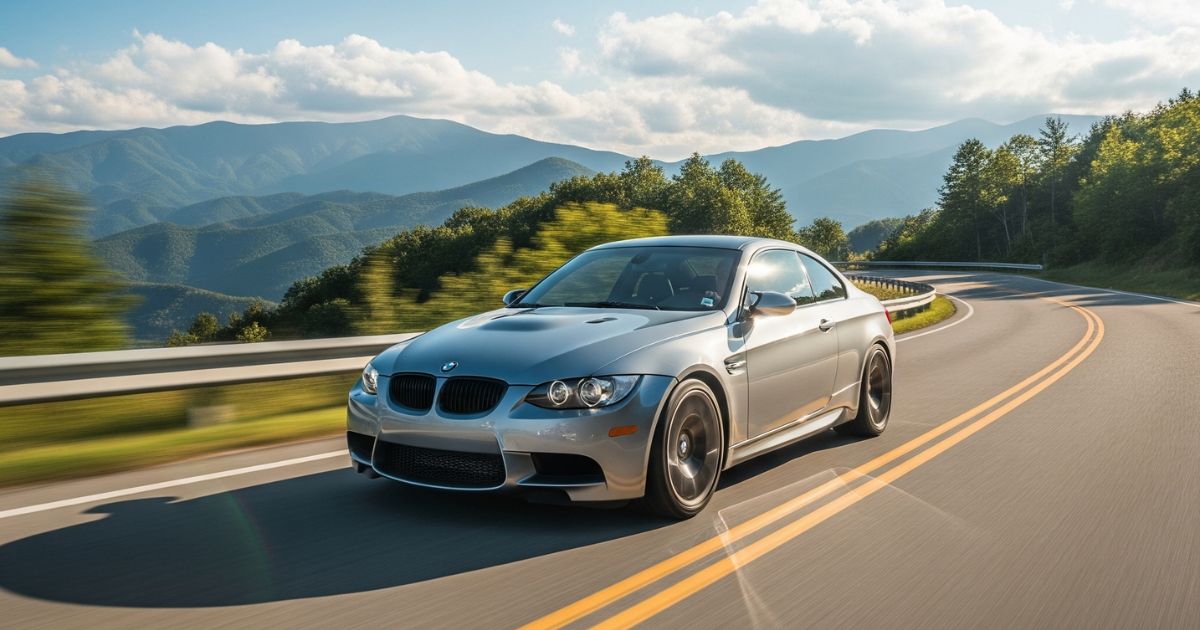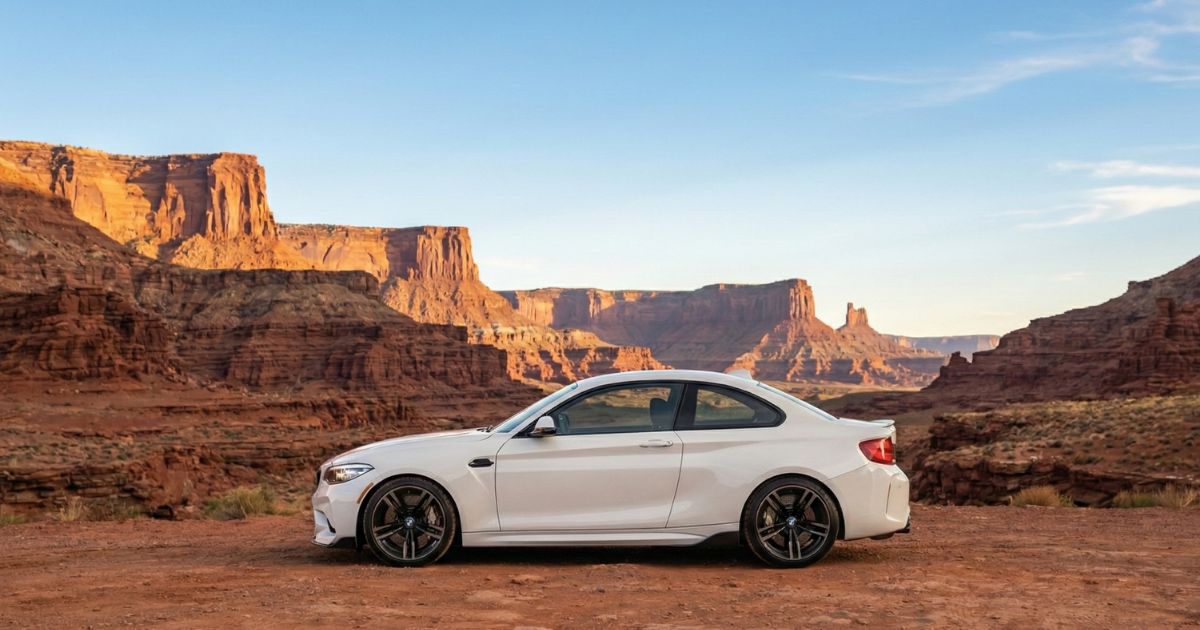
It's interesting how fast a car can go from new model to modern classic. The F87 M2 has already made that jump. Looking at where manufacturers are heading, more screens, more weight, more complexity, this car feels like a snapshot from a simpler time. A true rear-wheel-drive, straight-six machine with a manual gearbox and passive dampers. No complicated modes to dial in. No hybrid system to manage. Just the car and the road.
This isn't something you drive between stoplights. This is the car you've been thinking about since Monday, the one you take to your favorite stretch of road on Saturday morning. It makes a perfectly capable daily driver, but that's almost beside the point.
The Engine: N55, Not S55, and That's Fine
Under the hood sits the N55, not the twin-turbo S55 from the M3 and M4, and that distinction matters less than you might think. The N55 in the M2 is a beefed-up version of the engine found in the M235i, and it has its own character entirely. It pulls hard and smoothly, delivering linear power that never feels like it's trying to overwhelm the chassis. There's plenty of performance here without the constant sensation that you're managing something barely contained.
It also sounds exactly right. That gravelly, straight-six growl is unmistakably BMW, and in the M2's lighter, more focused package, it feels more honest than the same engine would in a heavier car.
How It Drives
BMW borrowed the chassis architecture from the M3 and M4, and you feel it from the first corner. The car is direct and planted in a way that inspires confidence rather than demanding it. Turn the wheel and the response is immediate, no body roll, no vagueness, no lag between input and reaction.
The steering is electrically assisted, which gives some buyers pause, but it delivers genuine feedback. You can feel what the front tires are doing, which is more than you can say for a lot of modern performance cars. The classic front-engine, rear-drive balance is right there, exactly where it should be.
The ride is firm. On a rough road it will get your attention, and at low speeds it asks for more focus than most cars in this class. For some buyers that's a drawback. For the buyer this car is actually built for, that firmness is the point, it's what keeps the car communicative at every speed.
What It Lacks, and Why That's Part of the Appeal
The interior is honest rather than special. No carbon bucket seats in the base car, no dramatic dashboard, nothing that announces itself as extraordinary. It feels, in places, like a well-sorted 2 Series. Buyers coming from an M4 or expecting the theatrical quality of a Ferrari cabin will notice the gap.
But strip away what it doesn't have and look at what remains: passive dampers that simply work, a steering rack with real feel, a manual gearbox, and a chassis that communicates rather than insulates. That combination is exactly what made the E46 M3 the reference point it became, and the F87 M2 comes closer to recreating that feeling than anything BMW has built since.
The E46 didn't rely on electronic systems to smooth out its rough edges. It was raw and direct and honest about what it was. The F87 carries that same spirit. It feels like an extension of your intentions, moving the way you're thinking before you've fully processed the thought.
Why It Has Already Earned Classic Status
Look at the proportions. Wide stance, muscular arches, compact footprint, it looks purposeful without looking theatrical. The connection to the E46 M3 is visible in the stance and in the philosophy behind it.
The F87 M2 makes a quiet argument: a great driving machine doesn't need the most horsepower. It needs a great engine, a great chassis, and the kind of character that makes you look for reasons to drive it rather than reasons to stay home. This car provides all three.
As BMW's lineup grows larger, heavier, and more mediated by electronics, the F87 M2 stands out as the last of something specific. That's not nostalgia talking, it's just an accurate description of where the industry went after this car was built.
Frequently Asked Questions
Is the BMW F87 M2 reliable for daily driving?
Yes. The N55 engine in the M2 has a strong reliability record when maintained correctly, regular oil changes at appropriate intervals and cooling system attention at higher mileages are the primary considerations. It is significantly less maintenance-intensive than the S55-powered M3 and M4, which carry the rod bearing concern that requires proactive management.
How does the F87 M2 compare to the newer G87 M2?
The G87 M2 is more powerful and more refined, with the S58 engine from the M3 Competition. It is also heavier and more electronically managed. The F87 is lighter, simpler, and more communicative, the tradeoff between the two comes down to whether you prefer outright capability or driver connection, and both are legitimate answers.
What should I look for when buying a used F87 M2?
Service history with consistent oil change intervals, any documentation of track use with corresponding maintenance records, and cooling system condition on higher-mileage examples. The F87 M2 does not carry the high-stakes maintenance requirements of the S55-powered cars, but a documented history is still the clearest indicator of how the car was treated.