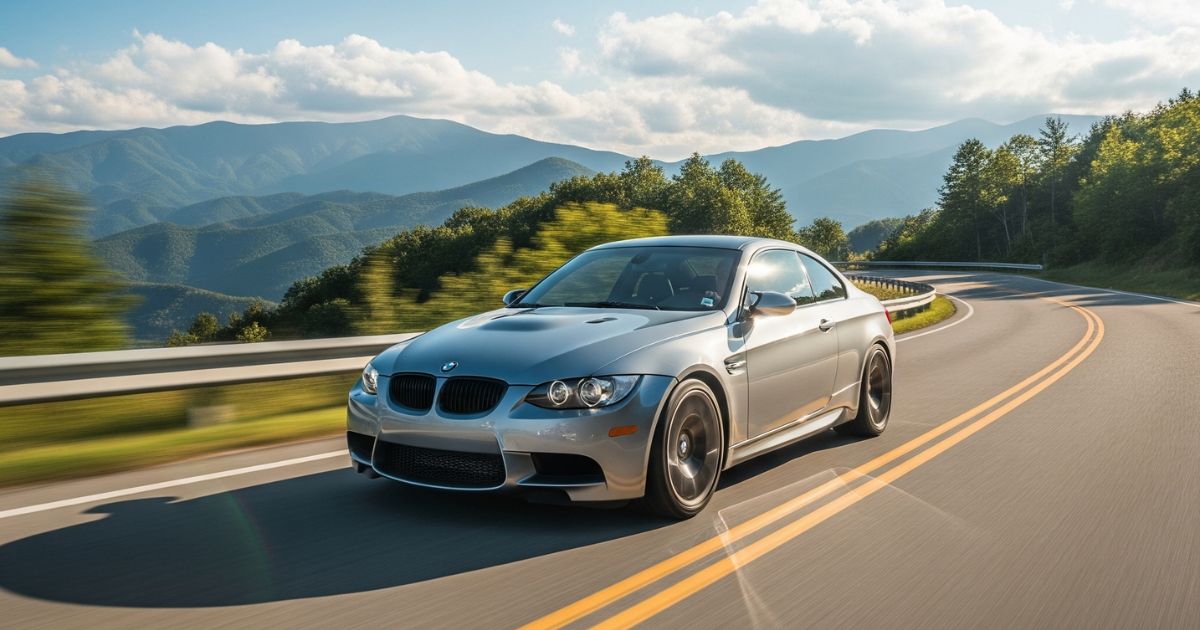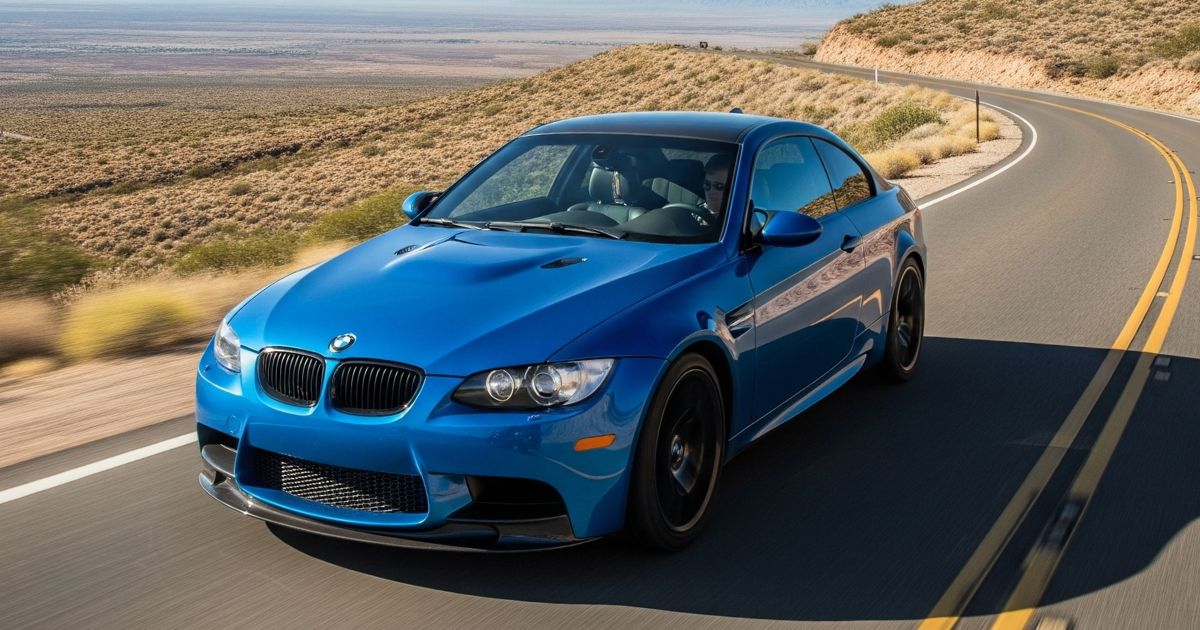
The BMW E9X M3, produced between 2008 and 2013, holds a singular position in the M3 lineage: it is the only M3 ever built with a V8 engine. The S65's 4.0-liter naturally aspirated V8, with its 8,400 RPM redline and individual throttle bodies, produces a sound and a power delivery character that no turbocharged successor replicates. As the industry moved toward forced induction, the E9X M3 became exactly what enthusiasts feared they were losing.
In 2026, that status has translated into real collector value. Clean, documented examples are appreciating steadily, and the cost of buying a neglected car, particularly one with unaddressed rod bearing history, is severe. Here is what you need to know.
The Lineup: E90, E92, and E93
The E9X generation covers three body styles built on the same platform with the same powertrain.
The E92 coupe is the most common variant and the lightest of the three. Non-sunroof models feature a carbon fiber reinforced plastic (CFRP) roof that lowers the center of gravity, these slicktop cars are increasingly sought after by collectors.
The E90 sedan is significantly rarer than the coupe and offers four-door practicality with flared rear arches that distinguish it visually from the standard 3 Series. Rarity and practicality together make the E90 M3 one of the more interesting value propositions in the current market.
The E93 convertible features a retractable hardtop and delivers the S65's exhaust note in the most unfiltered way possible. It carries a roughly 400-pound weight penalty and lacks the structural rigidity of the fixed-roof cars. It trades at a discount to the coupe in the collector market, and for most buyers the coupe is the right choice.
The S65 V8: What Makes It Special and What Can Go Wrong
The S65B40 produces 414 horsepower and 295 lb-ft of torque from 4.0 liters, with a redline of 8,400 RPM. It was derived from the S85 V10 in the E60 M5 and shares that engine's high-revving character and tight engineering tolerances.
Those tight tolerances are also the source of the S65's primary vulnerabilities.
Connecting rod bearings are the defining mechanical concern of E9X M3 ownership. The S65 was built with extremely tight bearing clearances, and insufficient lubrication, from extended oil change intervals, insufficient warm-up, or oil starvation under hard cornering, accelerates wear. Bearing failure is catastrophic: it destroys the crankshaft and engine block. Preventive replacement with upgraded bearings, BE Bearings and VAC Motorsports are the well-regarded options in the community, is the standard of care. Documentation of this service, with part numbers and mileage, is the single most important item in any E9X M3 service history.
Throttle actuators are the second most scrutinized item. Each cylinder bank has an electronic actuator with internal plastic gears that strip and circuit boards that fail from heat soak. Failure triggers limp mode and a check engine light. Upgraded actuator rebuilds are well-established, look for documentation of replacement with upgraded units on both banks.
Main bearing wear is less common than rod bearings but has been documented on higher-mileage and early production examples. Worth checking during a PPI on cars with significant miles.
The idle control valve (ICV) can cause erratic idling or stalling when coming to a stop. Minor compared to the bearing concerns, but worth noting.
Transmission: DCT or Manual?
Both transmissions have legitimate advocates in the E9X M3 community, and neither is the wrong choice.
The M-DCT seven-speed dual-clutch shifts faster than a human can manage a manual and is genuinely robust when maintained correctly. It requires fluid and filter changes every 50,000 miles, specifically the mechatronic side pan and top gasket. A car over 60,000 miles without documented DCT service is carrying a known upcoming expense.
The 6-speed Getrag manual offers the analog connection that a subset of buyers specifically wants. It is less efficient than the DCT in outright performance terms but more involving to drive. Watch for worn second-gear synchronizers on cars with track history, a sign of hard use that is worth flagging during a PPI.
Suspension and Chassis: What's Wearing Out
The E9X M3 chassis is celebrated for its 50/50 weight distribution and hydraulic steering feel. Many examples are now old enough that suspension components are reaching the end of their service life.
Electronic Damper Control (EDC), where fitted, uses Sachs shocks that are expensive to replace when they leak. Check each shock body for fluid residue, it is a common failure point on higher-mileage cars.
Front tension strut bushings are fluid-filled and frequently leak or crack by 60,000 miles, producing steering wheel shimmy under braking. Their condition should be noted in any inspection report.
Rear subframe bushings perish with age and hard use, producing vagueness in the rear end during cornering. The E9X subframe itself is more robust than the E46's, but the rubber mounts around it are wear items.
Body: What to Inspect
Carbon fiber roof delamination on E92 slicktop models is worth checking carefully. The clear coat on the CFRP roof can peel or yellow from UV exposure, correcting it requires a professional sand and re-clear process.
Front fascia and rear fender rock chips are nearly universal on driven examples. Look for quality respray work or the presence of Paint Protection Film. Poorly executed repairs are worth noting and negotiating.
Jacking point covers, small plastic covers on the side skirts, go missing frequently and are a small but telling indicator of how attentively the car was kept.
Interior: Where Age Shows
Novillo leather bolster wear on the driver's seat is predictable and nearly universal on higher-mileage cars. Check the entry point on the driver side for cracking and dye loss.
iDrive generation matters more than most buyers realize. 2008 cars used the CCC system, which is slow and prone to failure. 2009 and later cars received the significantly improved CIC system. Many owners retrofit the NBT Evo system for modern smartphone integration, worth noting if present.
Cup holders are a minor but telling detail. The pop-out mechanism is notoriously fragile. Ensure they eject and retract smoothly.
What the Service History Must Show
For any E9X M3, the service binder should document:
The Market in 2026: What Drives Value
E93 convertibles at 60,000–80,000 miles trade in the $28,000–$35,000 range. E92 coupes without the Competition Package at 50,000–70,000 miles are $38,000–$48,000. E90 sedans with manual gearboxes at 40,000–60,000 miles command $50,000–$65,000. Low-mileage ZCP LCI coupes are $75,000–$95,000 and climbing.
The Competition Package (ZCP), introduced in 2011, adds Style 359M wheels, a 10mm lower ride height, and remapped EDC and DSC, and carries a $5,000–$10,000 premium over equivalent non-ZCP cars.
Individual colors drive significant premiums. Dakar Yellow, Fire Orange (the Lime Rock Park Edition color), and Laguna Seca Blue are the colors collectors want. Common colors like Space Grey and Alpine White price accordingly.
LCI cars from 2011 onward feature LED taillights and updated interior trim, worth prioritizing if the choice is between similarly priced pre- and post-facelift examples.
Frequently Asked Questions
Is rod bearing replacement on an E9X M3 absolutely necessary?
Yes, if the history is undocumented or unknown, treat it as an immediate priority before driving the car hard. This is not a precautionary suggestion. It is the single most important maintenance item on the S65, and skipping it on a car with unknown bearing history is how engines get destroyed.
Is the DCT or manual transmission better for daily driving?
The DCT is more capable in outright performance terms and genuinely pleasant in everyday use once you adjust to its character. The manual is more involving and preferred by a specific subset of buyers. Neither is wrong, but the manual commands a premium in the current market and is easier to sell.
What is the E90 sedan worth compared to the E92 coupe?
The E90 sedan commands a premium over the coupe in the current market due to its rarity and four-door practicality. A clean manual E90 sedan is one of the stronger value propositions in the E9X M3 market right now.