Jan 13, 2026
The Island of Speed: A Masterclass in the Circuit Gilles Villeneuve
Explore the legacy of Circuit Gilles Villeneuve: From the 1978 homecoming to the "Wall of Champions." Dive into F1’s soulful, high-speed track in Montreal.
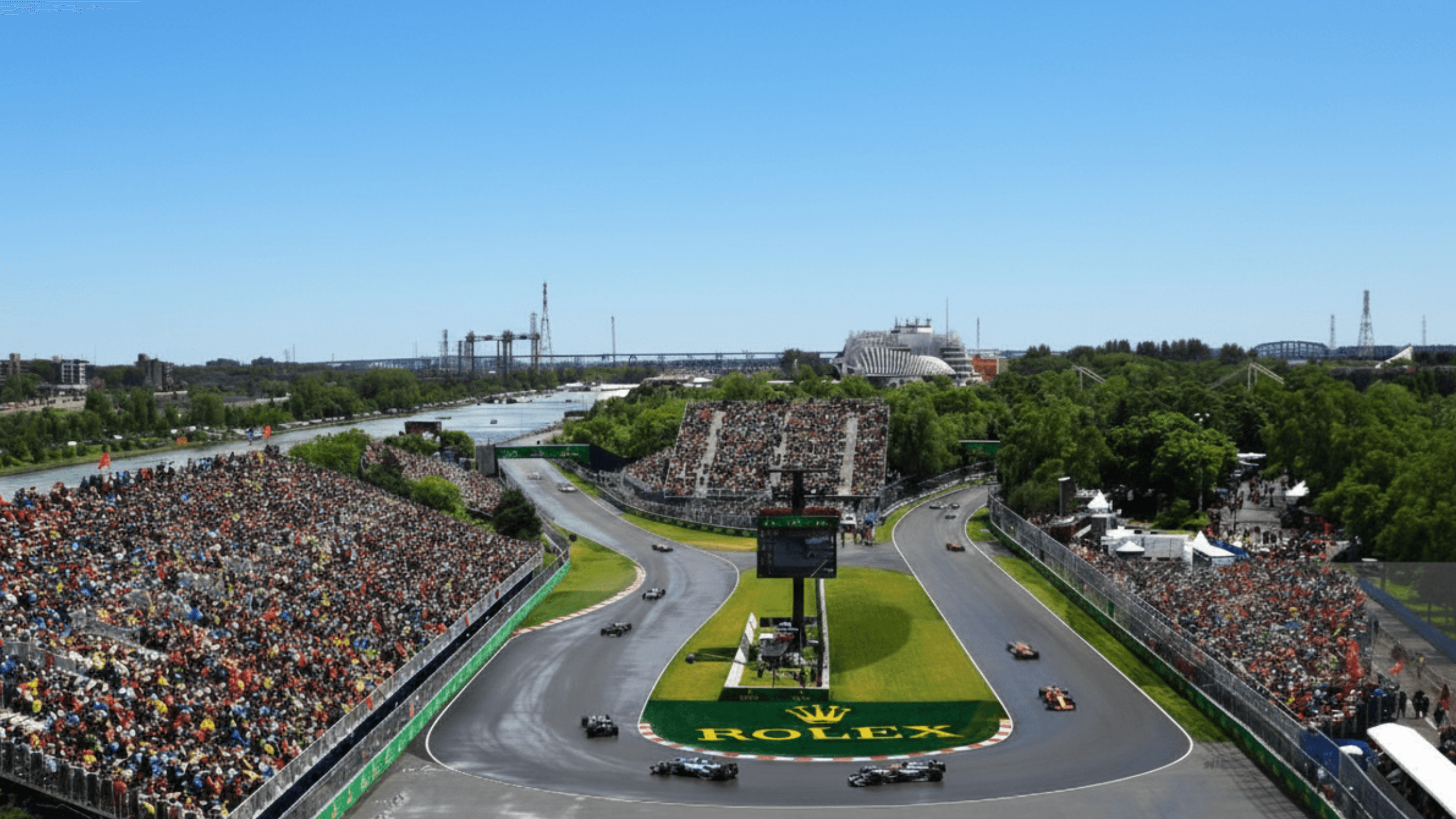
The origins of Circuit Gilles Villeneuve are as unique as its reputation. It is not a sterile, purpose-built facility designed by an architect on a blank canvas; it is the accidental masterpiece of Montreal's urban ambition.
Located on Île Notre-Dame, a man-made island in the St. Lawrence River, the ground beneath the tires is quite literally the city's history. The island was constructed from 15 million tons of rock excavated in 1965 during the building of Montreal’s Metro system. It hosted Expo 67 and the 1976 Summer Olympics, but its transformation into a racing venue in 1978 was born of necessity when safety concerns forced Formula One to leave Mosport Park.
The Villeneuve Legacy: More Than a Name
The inaugural race on October 6, 1978, remains a piece of national folklore. In a cinematic triumph, hometown hero Gilles Villeneuve, piloting a Ferrari, secured his first F1 victory in front of a captivated crowd. Following his tragic passing in 1982, the circuit was renamed in his honor. This wasn't just a rebranding, it turned the asphalt into a monument. When drivers cross the start-finish line today, they are literally driving over a legend’s playground.
The Technical Gauntlet: A Stop-Start Nightmare
The current 2.7 mile layout is a brutal test of mechanical endurance. Unlike the sweeping curves of Spa, Montreal is a "stop-start" circuit consisting of high-speed straights interrupted by violent chicanes.
The Braking Tax: This track is a cemetery for brake discs. Drivers decelerate from over 196 mph into tight turns like the Turn 10 Hairpin, putting immense thermal stress on the cars.
The 2026 Evolution: To stay on the calendar, the circuit recently underwent a "Total 180" modernization. For the 2025 season, organizers debuted two-story hospitality centers that quadrupled paddock space, addressing long-standing complaints from teams like Ferrari and Red Bull about the cramped nature of the island.
The Wall of Champions: Error is Absolute
No feature is more notorious than the "Wall of Champions" at Turn 14. This final chicane exit earned its name in 1999 when it claimed three World Champions, Damon Hill, Michael Schumacher, and Jacques Villeneuve, all in a single afternoon.
The challenge is geometric. To set a competitive lap, you must dance across the aggressive curbs of the final chicane. If you take too much curb, the car becomes airborne, if you take too little, you lose the exit speed onto the 0.7 mile straight. The margin for error is measured in millimeters, and the concrete barrier, ironically adorned with the "Bienvenue au Québec" greeting sign, is unforgiving.
The Miracle of 2011 and Modern Dominance
The circuit breathes drama. The 2011 Canadian Grand Prix remains the longest race in F1 history (over four hours), where Jenson Button staged a six-pit-stop comeback to win on the final lap. This unpredictable nature is why the track remains a fan favorite.
While Michael Schumacher and Lewis Hamilton share the record for most wins (7 each), the new era belongs to the precision masters. In 2025, George Russell claimed a calculated victory, reinforcing that while the walls are close, the rewards for technical perfection are unparalleled.
Montreal’s Economic Heartbeat
The Grand Prix is the financial engine of the city. Data from 2025 shows a staggering economic impact of $162 million, with over 350,000 attendees descending on the island. For one weekend, Montreal transforms into a global party town, with hotel rates surging by 167%. Yet, for the other 51 weeks of the year, the circuit returns to its dual identity: a peaceful public park for runners and cyclists, proving that this soulful venue belongs to the people as much as the drivers.