Jan 13, 2026
Ross Brawn: The Quiet Giant Who Rewired Formula 1
Meet the Grandmaster of F1. From Ferrari's Dream Team to Brawn GP’s $1 miracle, discover how Ross Brawn’s strategic genius built dynasties and redefined racing.
In the high-strung world of Formula 1, where egos often outweigh aerodynamics, Ross Brawn remains the sport's greatest anomaly. He is not a flashy frontman or a temperamental genius. With his fisherman’s patience and a technician’s precision, Brawn spent five decades not just playing the game, but rewriting the rulebook.
Ross Brawn didn't just build cars, he built dynasties.
From Atomic Energy to Aerodynamics
Brawn’s journey began far from the glamour of Monaco, in the sterile, high-consequence environment of the UK Atomic Energy Authority. As an apprentice technician in 1971, he learned the value of absolute precision. When he joined Williams in 1978, then a fledgling outfit operating out of a carpet warehouse, he brought discipline with him.
It was in a Williams wind tunnel that Brawn had his first Eureka moment. While testing a model with venturi tunnels, he saw the untapped potential of ground effect. It wasn't just a discovery, it was an awakening to the idea that F1 is won in the invisible spaces between the car and the tarmac.
The Architect of the Schumacher Era
Brawn’s most lethal collaboration began at Benetton in 1991. Alongside designer Rory Byrne and a young Michael Schumacher, Brawn pioneered the system of success. He was the first to realize that a driver is only as fast as the strategy behind them.
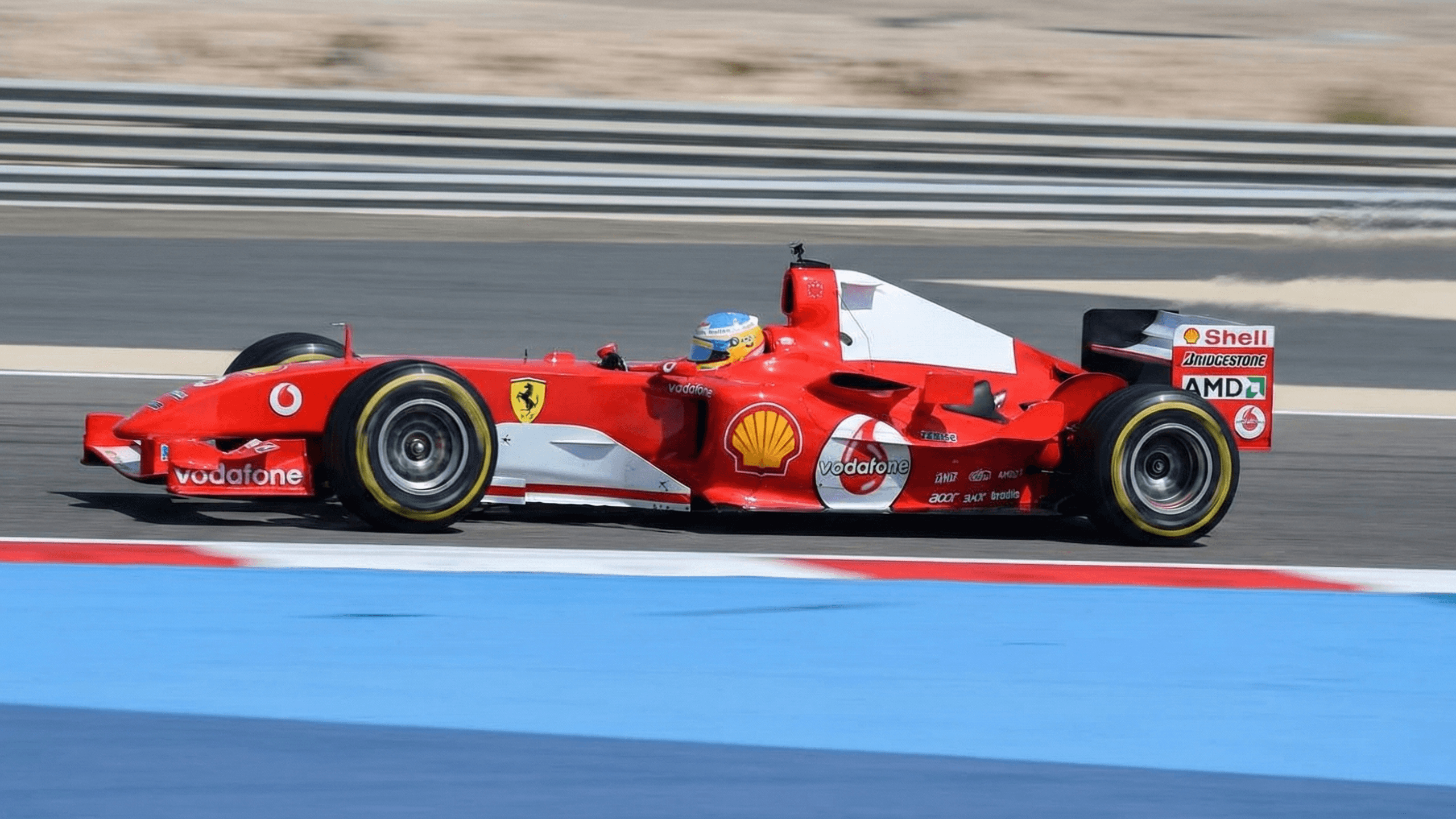
On the pit wall, Brawn was the single point of truth. He silenced the noise, ensuring that only his voice reached Schumacher’s ears. This synergy allowed for the high-risk, multi-stop strategies that redefined racing in the mid-90s. When the trio moved to Ferrari in 1997, they inherited a disorganized mess. Brawn didn't just fix the car and the culture. He introduced progress through stability, breaking down the silos between engine and chassis departments. The result? Five consecutive world titles and a level of dominance that had never been seen before.
The $1 Miracle: Brawn GP
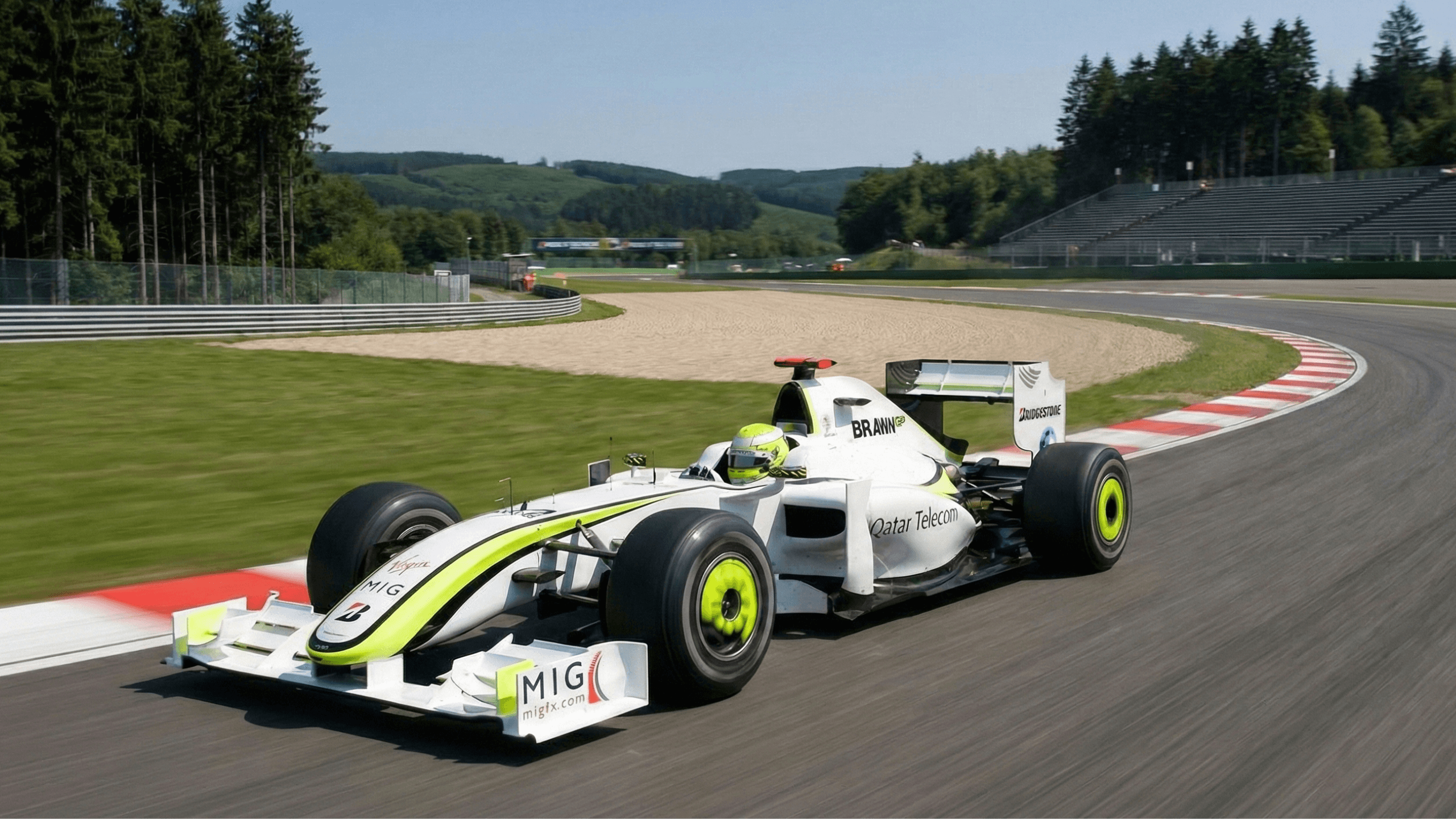
The year 2009 is Formula 1’s greatest Cinderella story. When Honda fled the sport during the global financial crisis, Brawn bet everything. He bought the team for a symbolic £1.
The BGP 001 was a barebones ghost of a car, but it possessed a secret weapon: the Double Diffuser. By exploiting a clever loophole in the new regulations, Brawn’s car found downforce where others found drag. Jenson Button won six of the first seven races, and a team with no sponsors and a skeleton crew clinched both world championships. It was the ultimate checkmate in a career defined by them.
The Final Reform: Shaping the Future
In 2017, Brawn returned as F1’s Managing Director of Motorsports. His final mission was his most ambitious: saving the sport from itself. He spearheaded the 2022 regulation overhaul, reintroducing ground effect and simplified aerodynamics to allow for closer, more aggressive racing. He moved F1 away from engineered parades and back toward pure competition. Brawn understood that for the sport to survive, the rules had to be as well-engineered as the cars.
The Builder’s Legacy
Adrian Newey draws the cars, Ross Brawn builds the world they race in. His legacy isn't found in a single drawing, but in the systems, the cultures, and the rulebooks he left behind. He taught the world that in the fastest sport on earth, the most powerful tool isn't a turbocharger, it’s clarity.