Jan 13, 2026
The Immortal Wedge: A Technical Biography of the McLaren M23
6 seasons, 16 wins, and 2 World Titles: Discover the technical evolution of the McLaren M23. From Fittipaldi’s precision to Hunt’s 1976 heroics, this is F1’s greatest workhorse.

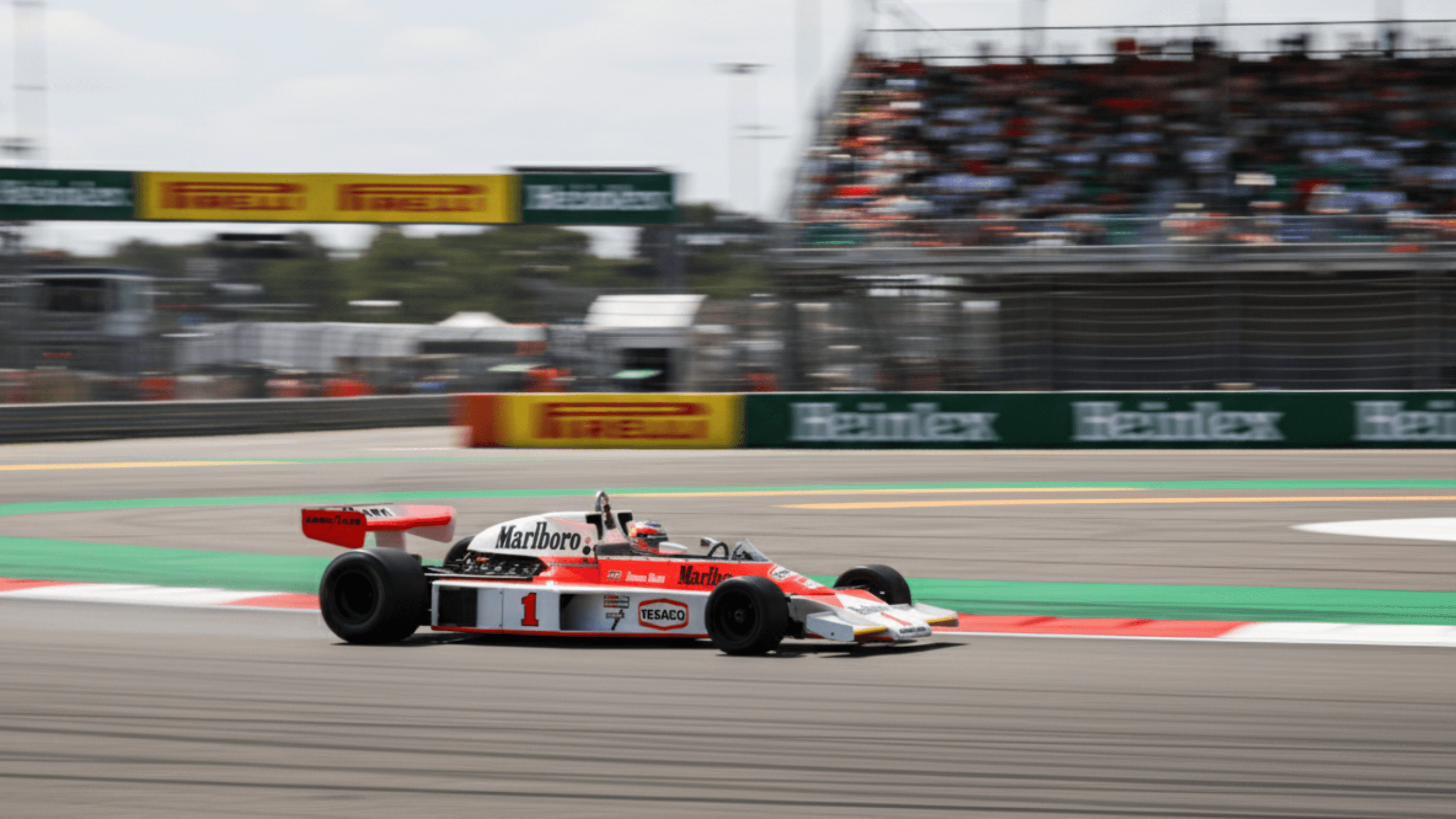
In the modern Formula One paddock, a car is obsolete the moment the season concludes. In the 1970s, however, the McLaren M23 was a defiant anomaly. It debuted in 1973 and was still taking pole positions in 1977. Over 80 Grands Prix, it delivered two Drivers’ Titles and one Constructors' Championship, proving that fundamental brilliance is more valuable than radical, untested innovation.
The Architecture of Adaptability
Designed by Gordon Coppuck with contributions from John Barnard, the M23 was a "Hybrid" in the truest sense. It blended the distinctive chisel nose and side-mounted radiators of the Lotus 72 with the robust mechanical bones of McLaren’s own M16 IndyCar.
The heart of the car was a 16-gauge aluminium monocoque. While rivals were experimenting with fragile layouts, Coppuck focused on a chassis that was notably stiffer than the competition. This rigidity allowed the suspension to do the heavy lifting, making the M23 one of the most predictable and driver-friendly machines of its era.
The Power of the Nicholson-McLaren DFV
Every M23 was propelled by the ubiquitous Ford Cosworth DFV V8, but these were no standard off-the-shelf units. They were meticulously massaged by Nicholson-McLaren Engines.
Output: Approximately 490 bhp at 10,500 rpm.
Evolution: In 1975, the team introduced a 6-speed Hewland gearbox, a tactical masterpiece that allowed drivers to keep the high-revving V8 in its power band more effectively than those limited to five gears.
Fittipaldi & The Science of Testing
The M23’s middle-age success was largely due to Emerson Fittipaldi. Joining from Lotus in 1974, Emerson brought a tactile approach to testing. He insisted on a 3-inch longer wheelbase and a 2-inch wider track, fundamentally shifting the M23’s weight distribution. These weren't just tweaks, they transformed the car into a traction monster, securing McLaren’s first World Championship in 1974.
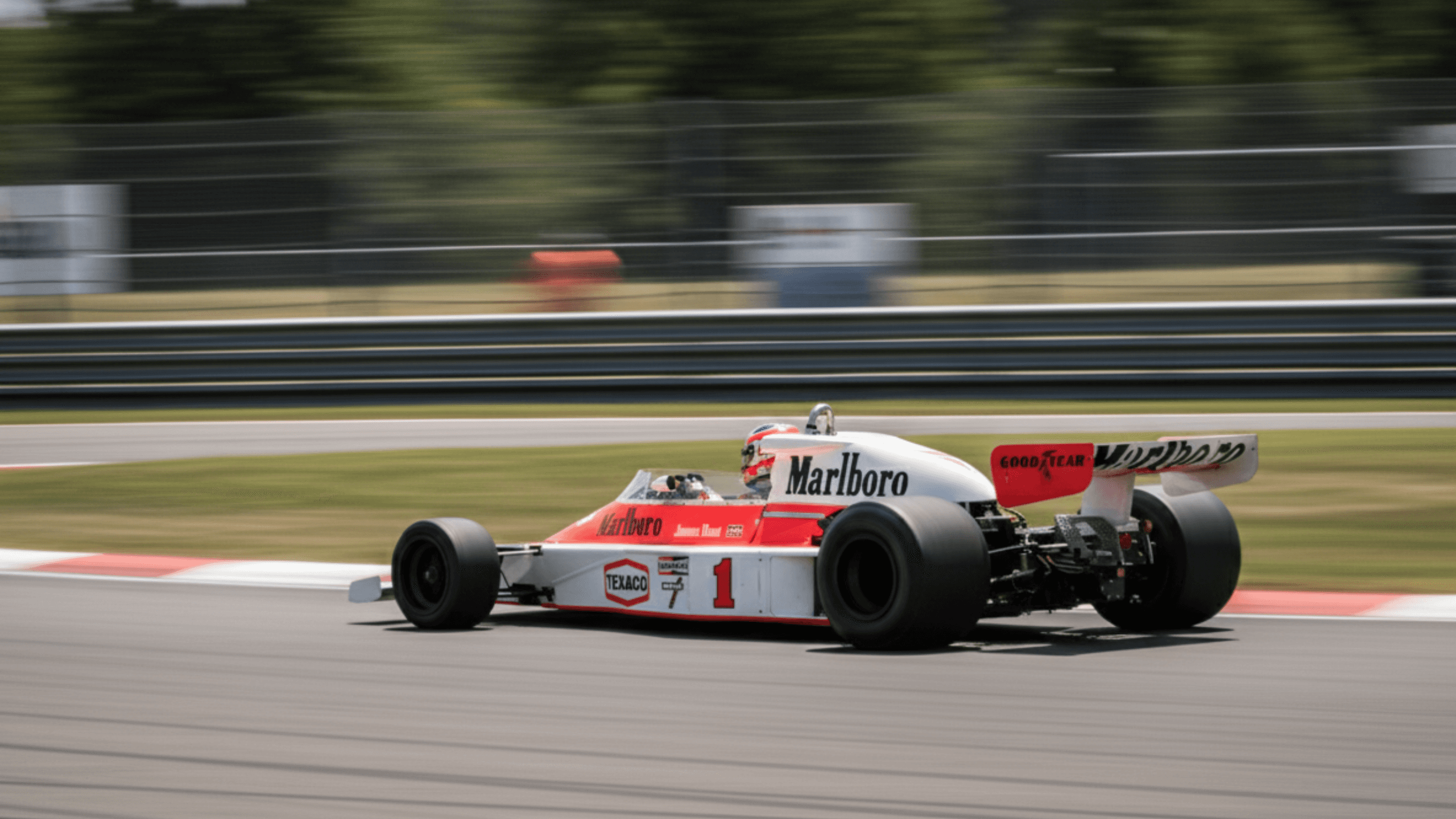
James Hunt and the 1976 Weight Loss Program
By 1976, the M23 was technically an elder statesman. To keep James Hunt competitive against Niki Lauda’s Ferrari 312T, McLaren embarked on a ruthless weight-reduction program, shaving over 30 lbs off the car.
Aerodynamics: They shortened the nose and experimented with winklepicker designs to find front-end bite.
The Hidden Innovation: McLaren was among the first to experiment with side skirts in 1975, sealing the underbody to the track. While it wasn't a ground effect car in the modern sense, the M23 was generating 150 lbs of downforce from its floor long before the Lotus 78 made it famous.
The Verdict: A Philosophy of Refinement
The McLaren M23 was not the most technically advanced car on the grid in any given year, but it was the best prepared. It taught the industry that a well-crafted initial design, combined with a systematic, year-over-year development approach, is more dangerous than a series of erratic breakthroughs.
It remains the quintessential McLaren: simple, robust, and devastatingly effective.