Jan 13, 2026
The Evolution of the Delta Integrale
The Lancia Delta Integrale: 6 consecutive WRC titles and the blueprint for AWD dominance. Explore the rally-bred tech and iconic Group A legacy.
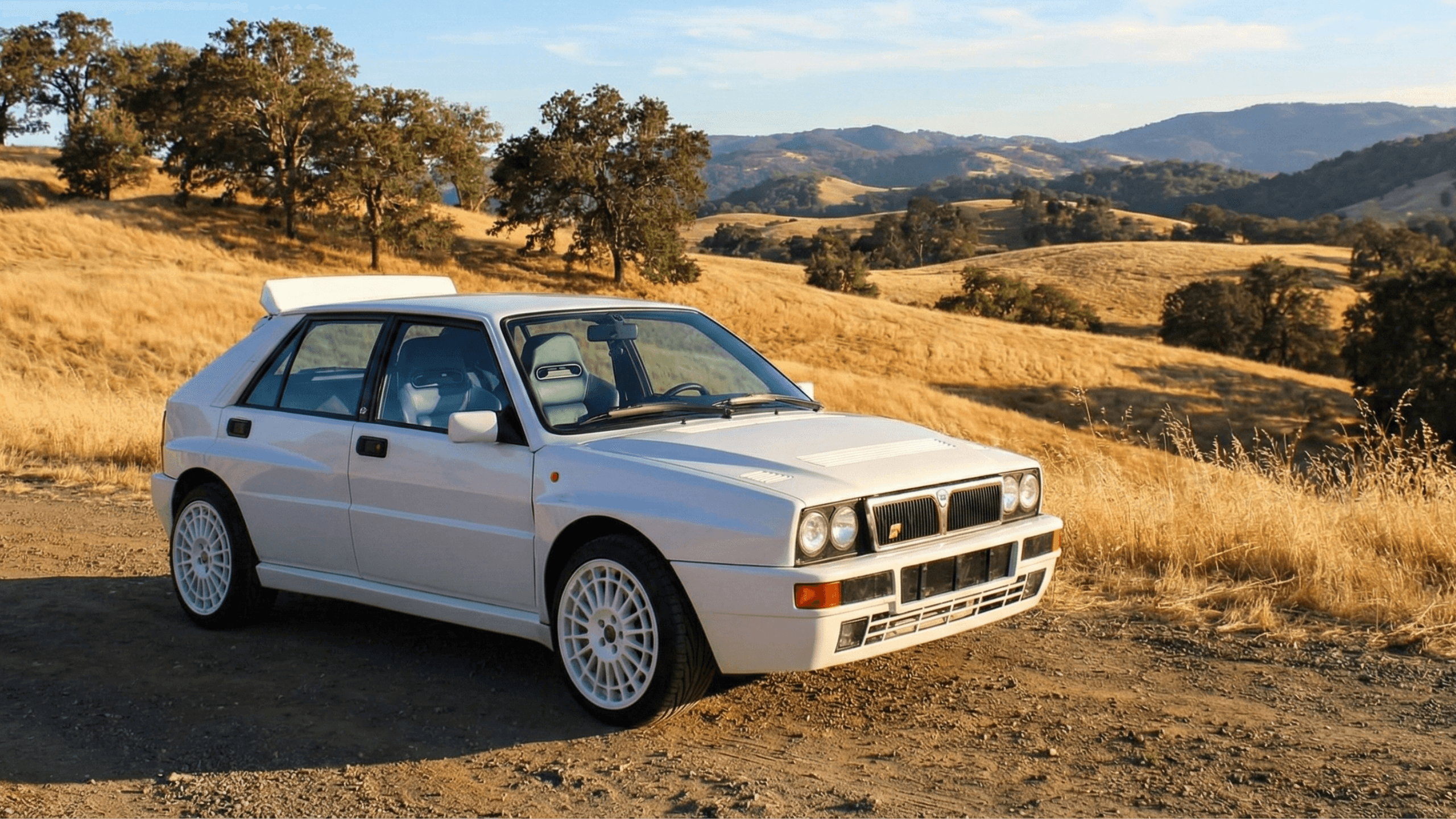
The Lancia Delta Integrale did not begin its life with a roar, it began with a whimper. When Giorgetto Giugiaro penned the original Delta in 1979, he wasn’t thinking about the Col de Turini or the dusty plains of the Safari Rally. He was thinking about the Volkswagen Golf. It was a crisp, two-box family car, an exercise in functional Italian design that earned it the European Car of the Year title in 1980. Underneath that sharp-edged body sat a modified Fiat Ritmo chassis with MacPherson struts and modest twin-cam engines. It was competent, but it was fundamentally a civilian.
The transformation of this civilian into a soldier was not an overnight success. In 1986, the FIA shuttered Group B after a string of fatal accidents. The era of the mid-engined, 600-horsepower fiberglass monsters was over. The World Rally Championship shifted to Group A, a set of rules that required cars to be based on production models with a minimum run of 5,000 units. While rivals like Ford and Audi were left holding blueprints for race cars that no longer had a home, Lancia was already sitting on the Delta HF 4WD.
The Foundation: The HF 4WD
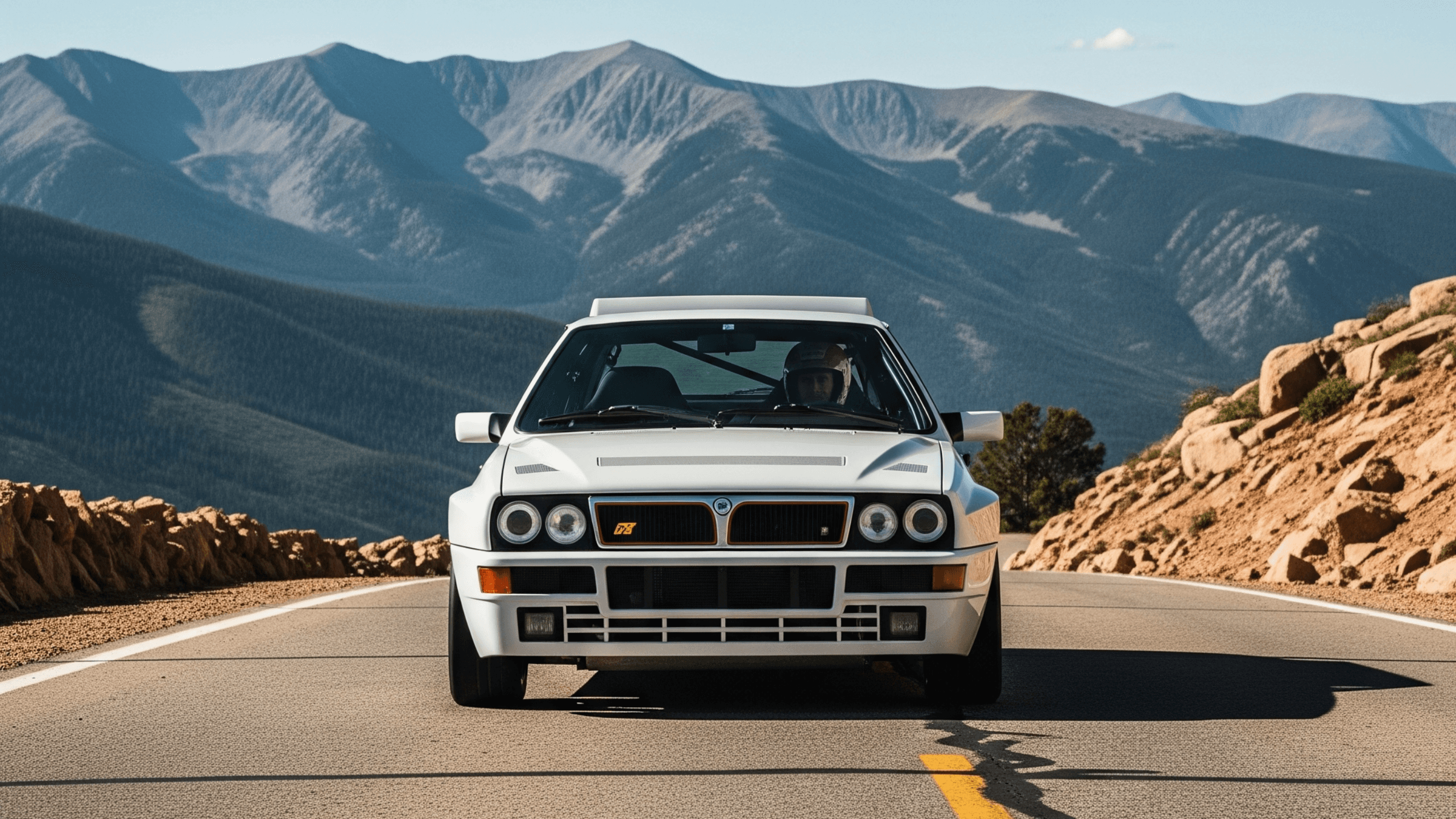
The HF 4WD was a masterpiece of resourcefulness. Lancia engineers didn't reinvent the wheel, they raided the Fiat Group’s best bins. They took the 2.0-liter turbocharged engine from the Thema and mated it to an all-wheel-drive system adapted from the Prisma 4WD. It was a Frankenstein build that worked. The road car produced 165 Bhp, but the competition version pushed 265 HP, breathing through sodium-filled valves to survive the heat of constant boost.
The genius of the HF 4WD lay in its drivetrain. It utilized a ZF self-locking front differential, a Ferguson viscous center differential, and a Torsen rear. This was high-level hardware for 1986. The initial torque split was 56/44, favoring the front wheels to ensure stability for the average driver. However, the car had a glaring Achilles’ heel: it was too narrow. The restrictive wheel arches meant Lancia couldn't fit the larger brakes or wider tires necessary for the increasing speeds of Group A.
The 8V and 16V: Refining the Weapon
By late 1987, Lancia addressed the HF’s physical limitations with the Integrale 8V. This is where the legend’s silhouette began to take shape. The addition of those iconic wheel arches allowed for 15-inch wheels and significantly larger brakes. Power jumped to 185 Bhp via a larger Garrett T3 turbocharger and a more efficient intercooler. It was faster and more aggressive, but Lancia was already looking toward the next technical leap.
In 1989, the Integrale 16V arrived, and it fundamentally changed how the car behaved at the limit. The new 16-valve cylinder head pushed output to 200 Bhp, requiring the now-famous bulge in the hood to clear the taller engine. More importantly, the engineers flipped the script on the drivetrain. They shifted the torque split to 47/53, favoring the rear. This was a tactical decision to cure the understeer inherent in the 8V. By sending more power to the back, they gave the drivers a car that could be rotated on the throttle, making it a surgical tool on tight tarmac stages.
The Evoluzione: The Apex of Group A
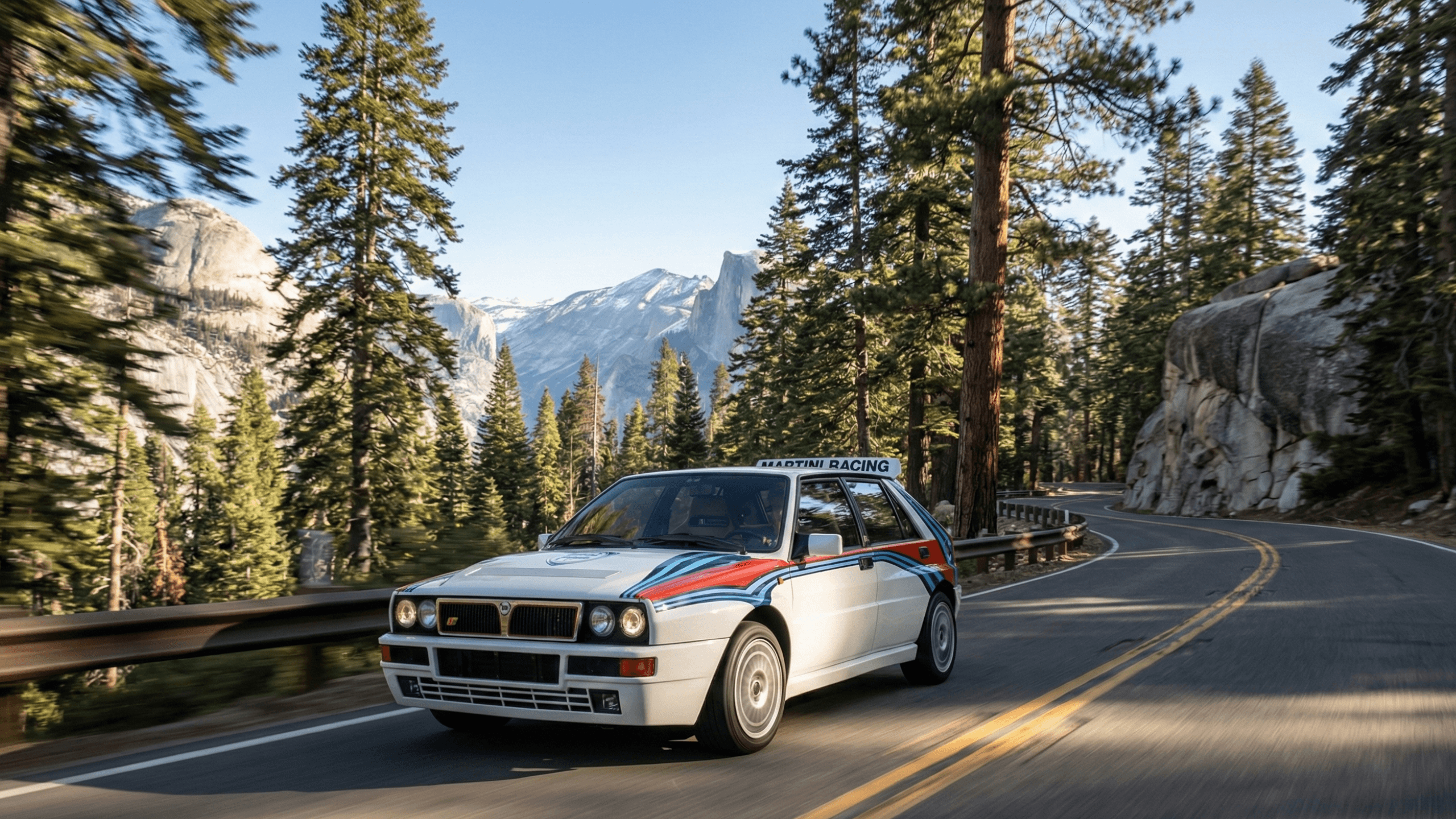
The story reached its peak with the Evoluzione series. If the 16V was a surgical tool, the Evo I was a sledgehammer. The track was widened, the body was stiffened, and the suspension geometry was completely revised with longer control arms. The Deltona, as it became known, featured a massive adjustable rear spoiler that looked like it belonged on a fighter jet.
When the Evo II arrived in 1993, the focus shifted slightly. The WRC factory team had already pulled out of the sport, and the Evo II was designed to satisfy the showroom as much as the stage. It featured a smaller, more responsive turbocharger to reduce lag and a catalytic converter to meet tightening emissions laws. While purists sometimes argue the Evo I is the rawer rally machine, the Evo II is the more polished road car, the version that collectors now hunt with six-figure budgets.
A Legacy Measured in Metal and Mud
Lancia’s dominance was not a fluke of timing; it was the result of a relentless, six-year technical siege. Between 1987 and 1992, the Integrale secured six consecutive Constructors' Championships, a feat that remains unmatched. It won on the ice of Monte Carlo, the smooth tarmac of Corsica, and the rocks of Greece.
The Integrale defined the Homologation Special. It proved that a mass-produced hatchback, if engineered with enough foresight and mechanical grit, could become an icon. It paved the way for the Subaru Impreza WRX and the Mitsubishi Lancer Evolution, sparking a Japanese arms race that dominated the 90s. But for all their sophistication, those later cars always felt like they were chasing the ghost of the Lancia. The Integrale remains the undisputed king of the Group A era, a car born from a family hatchback that grew up to conquer the world.